

Estimating Salaries with the AI Salary Estimator
SmoothHiring's AI Salary Estimator helps employers understand appropriate compensation ranges for candidates based on their qualifications, experience, skills, location, and the specific job role. This tool supports more informed and competitive offer decisions.
What Is the AI Salary Estimator?
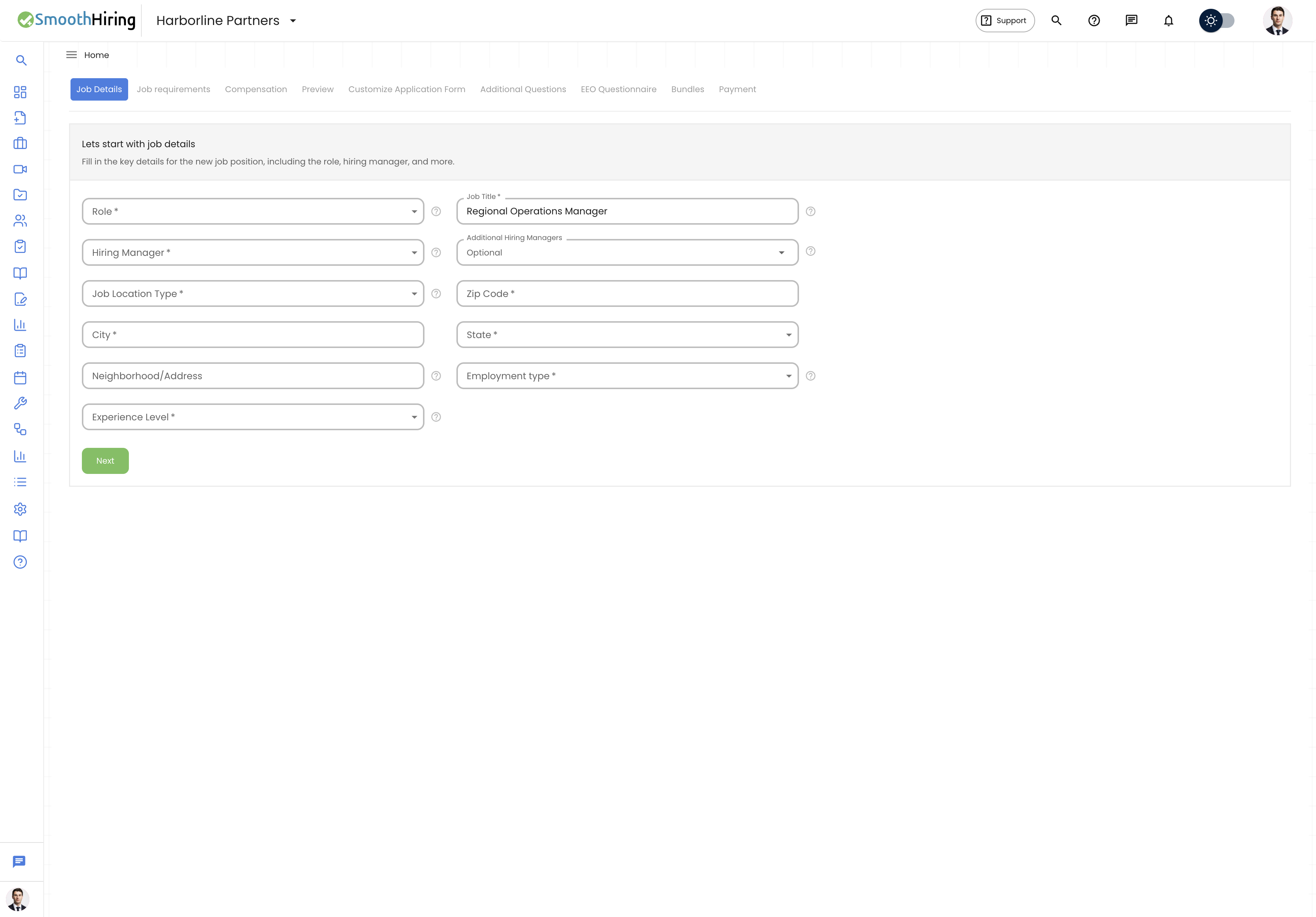
The AI Salary Estimator analyzes multiple data points to generate salary range recommendations for candidates and roles. It considers:
- Candidate qualifications — education level, certifications, and degrees
- Work experience — years of experience, seniority of previous roles, industry background
- Skills — technical and soft skills identified through AI Resume Parsing
- Location — geographic cost-of-living adjustments
- Job role — the specific position, industry, and level
- Market data — current compensation trends and benchmarks
How It Works
Data Sources
The AI Salary Estimator combines:
- Parsed resume data — extracted from candidate resumes via AI Resume Parsing
- Job posting details — role title, description, requirements, and location from the job posting
- Assessment performance — how the candidate performed relative to role expectations
- Market compensation data — industry salary benchmarks and regional adjustments
Estimation Process
- The AI analyzes the candidate's qualifications and experience
- It maps these against the job's requirements and level
- Location-based adjustments are applied
- A salary range is generated with low, mid, and high estimates
- Contextual factors are noted (e.g., specialized skills that command premium, entry-level adjustments)
Understanding Salary Estimates
Range Format
Salary estimates are typically presented as a range:
| Component | Description |
|---|---|
| Low estimate | The lower bound of the competitive salary range for this candidate-role combination |
| Mid estimate | The most likely competitive salary point |
| High estimate | The upper bound, typically for candidates with exceptional qualifications or in high-demand markets |
Factors That Influence Estimates
| Factor | Impact |
|---|---|
| Years of experience | More experience generally increases the estimate |
| Education level | Advanced degrees may increase the range |
| Specialized skills | In-demand technical skills can significantly increase estimates |
| Location | Major metro areas typically have higher ranges than rural areas |
| Industry | Some industries pay premium for similar roles |
| Role seniority | Management and leadership positions have higher ranges |
| Certifications | Relevant professional certifications may increase the estimate |
Using Salary Estimates
During Hiring
- Set competitive offers — ensure your offer falls within the estimated range to remain competitive
- Budget planning — use estimates to forecast hiring costs for open positions
- Candidate comparison — compare estimates across candidates to understand the market value of different qualification profiles
- Negotiation preparation — understand the full range to prepare for salary negotiations
Best Practices
- Treat estimates as guidance — AI estimates are based on available data and market trends, but individual circumstances may vary
- Consider total compensation — salary is one component; consider benefits, equity, bonuses, and other perks
- Account for role-specific factors — some roles may have unique compensation dynamics not fully captured by the AI
- Verify with market research — cross-reference AI estimates with industry salary surveys and local market data
- Update regularly — market conditions change; re-evaluate estimates for roles that remain open for extended periods
Integration with Assessment Data
The AI Salary Estimator works alongside other SmoothHiring features:
| Feature | Integration |
|---|---|
| AI Resume Parsing | Provides the candidate qualification data that feeds into estimates |
| Job Fit & Assessments | Strong job fit may justify offers at the higher end of the range |
| Predictive Analytics | Historical hiring data improves estimate accuracy over time |
| AI Candidate Recommendations | AI recommendations can reference salary expectations as part of the overall candidate evaluation |
Data Privacy
- Salary estimates are generated for employer use only
- Estimates are not shared with candidates
- The AI does not store or share candidate salary history
- Compliance with pay transparency laws should be verified by the employer for their jurisdiction
Limitations
- Estimates are based on available market data and may not reflect hyper-local conditions
- Unusual or highly specialized roles may have limited comparable data
- Estimates should be validated against your organization's compensation framework
- Real-time market shifts (e.g., sudden demand changes) may not be immediately reflected