
Once a business starts hiring on a regular basis, someone asks if it is time to add a recruiting CRM on top of the applicant tracking system, or ATS software.
The pitch sounds simple: an ATS tracks people who already applied, while a CRM helps you reach people who have not applied yet. For a staffing agency handling dozens of clients, that split is worth paying for. For a 15-person company filling three or four roles a year, it often is not.
This guide explains what a recruiting CRM adds, who the category is built for, what it costs, and the signs that tell you whether your business needs one or whether your ATS already covers the job.
What a Recruiting CRM Actually Adds Over an ATS
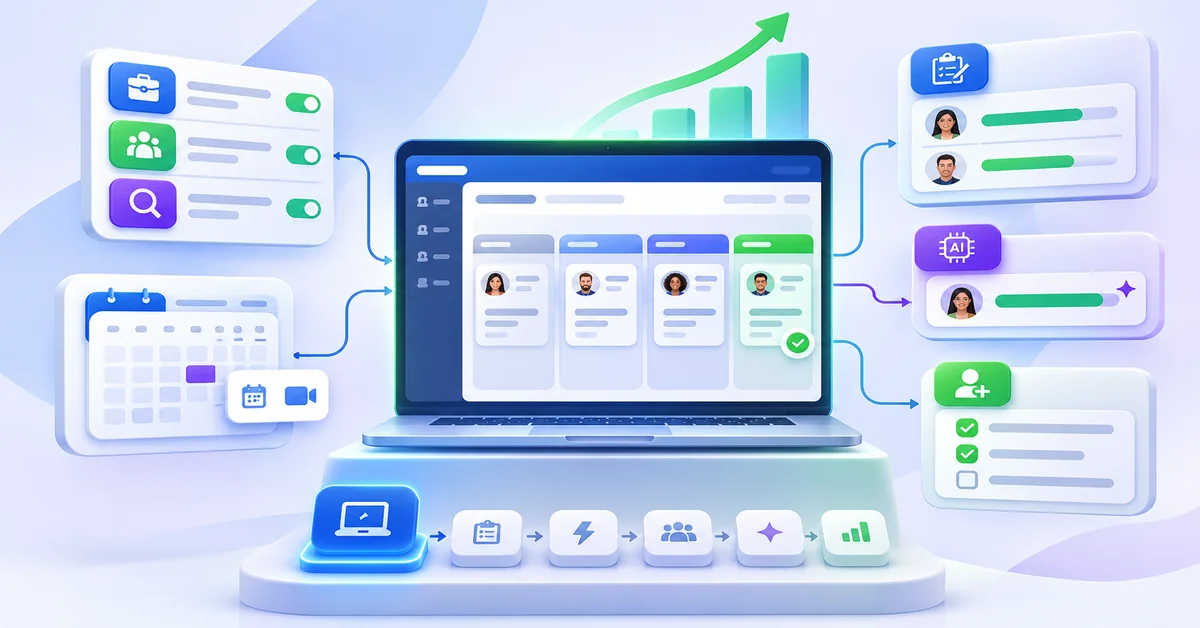
An applicant tracking system manages people after they apply: resume intake, screening, interview scheduling, and offer tracking. A recruiting CRM manages people before they apply, or before a role even exists. It is built around outreach sequences, long-term contact tracking, and candidate pipelines a recruiter nurtures until a matching role opens.
The two tools solve different problems. That difference matters for the right team. For a deeper look at how ATS platforms differ by setup and scope, see our guide to the types of applicant tracking systems.
Who Recruiting CRMs Are Actually Built For
Look at who the major standalone recruiting CRM vendors sell to, and a pattern shows up fast.
Loxo sells to recruitment firms, executive search firms, agency teams, and talent acquisition pros. Recruit CRM and Crelate are built for staffing and boutique agencies that manage multiple client searches at once. Bullhorn is the default choice for large staffing firms with high-volume placement work. Even Gem, which is built for in-house teams rather than agencies, is priced in a way that analysts say often makes it a better fit for larger businesses with dedicated sourcing staff.
That is not a coincidence. Agencies need a CRM because they source all the time, for many clients, with candidates who may fit a different role next month. A direct employer filling a few open roles each year has a very different problem, and usually a smaller one, than the CRM category is built to solve.
What Standalone CRM Software Actually Costs
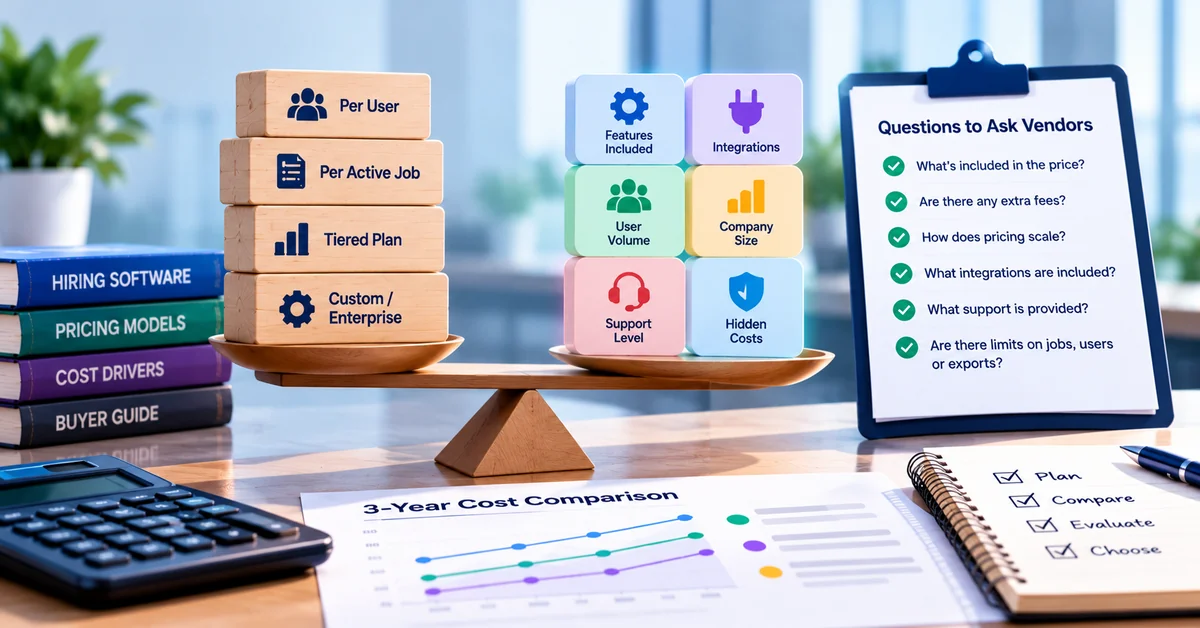
Adding a dedicated CRM on top of an ATS is not free, and the pricing shows who the tools are built for.
| Tool | Starting Price | Built For |
| Gem | $3,600 to $4,000 per user/year | Large in-house talent teams |
| Loxo | Free plan, or from $169/user/month | Agencies and solo recruiters |
| Recruit CRM / Crelate | Mid-market, custom pricing | Staffing and boutique agencies |
For a company with one or two people handling hiring, adding a $4,000-per-seat tool on top of existing ATS software is a real cost to justify. It only pays off if the sourcing volume is there to use it.
What’s Already Built Into a Modern ATS
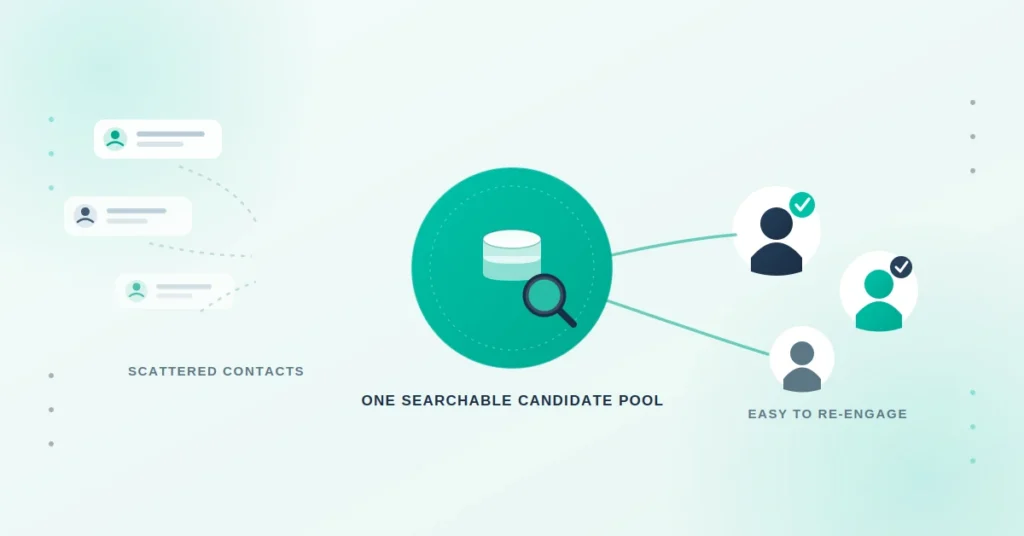
Here is what often gets missed in the ATS-vs.-CRM debate: a lot of what a small business wants from a CRM, namely a searchable record of past candidates and a way to re-engage them, is already inside most modern applicant tracking system platforms.
SmoothHiring, for example, keeps every past applicant stored and searchable instead of dropping them when a role closes. It also uses candidate pools and tags to organize them, plus tools for reaching out to passive candidates right from the platform.
None of that is a full CRM. It will not run long drip campaigns across a database of tens of thousands of passive candidates the way Gem or Loxo will. But it does cover the real use case most small businesses have: someone great interviewed for a role that is now filled, and you want to find them again when the next one opens.
Signals You Actually Need a Dedicated CRM
- You have someone whose job is sourcing, not just screening applicants who come to you
- You hire the same two or three role types again and again and want a standing pipeline for them
- You compete for scarce, high-demand talent where waiting for inbound applicants is not realistic
- You run several searches at once across teams or departments
- Your current process for reaching out to a maybe-later candidate is a spreadsheet, a personal inbox, or memory
Signals Your ATS Is Enough
- You post a role, screen who applies, and hire, with little proactive sourcing in between
- You fill under about 20 to 30 roles a year
- Hiring is one part of someone’s job, not their whole job
- You have never gone looking for a past applicant and wished you had a better way to find them
- Budget and tool sprawl are real limits, not abstract worries
- Your AI applicant tracking system already lets you tag, search, and re-engage past candidates
The Honest Answer for Most Small Businesses
If most of the signals above point to ATS enough, that is not a consolation prize. It is an accurate read of where a business’s hiring is right now. The recruiting CRM category was built to solve a sourcing at scale problem that most small businesses do not have yet, and paying for it early does not make hiring faster. It just adds a second tool and a second bill.
The better first step is to confirm what your existing
Frequently Asked Questions
Can a small business use an ATS instead of a recruiting CRM?
Yes. A small business making under about 20 to 30 hires a year without dedicated sourcing staff usually gets what it needs from a modern applicant tracking system, including candidate pools and past-applicant search, without paying for a separate CRM.
What’s the main difference between an ATS and a recruiting CRM?
An ATS manages candidates after they apply. A CRM manages relationships before they apply, often for roles that do not exist yet. Even an AI Applicant Tracking System stays in the ATS lane if it mainly handles screening, interviews, and offers.
How much does a recruiting CRM cost?
Standalone CRM tools range from free entry-level plans to $3,600 to $4,000 or more per user, per year for platforms like Gem, on top of whatever you already pay for an ATS.
Is a recruiting CRM only useful for staffing agencies?
Mostly, but not only. Agencies and high-volume in-house talent teams are the main market, since they source proactively and manage large passive candidate pools. A direct employer with occasional hiring needs rarely needs the same scale of tool.
Do I need a CRM if I already use an ATS with candidate pools?
Usually not right away. If your ATS already lets you tag, search, and re-engage past candidates, that covers the core CRM use case for most small businesses. A dedicated CRM becomes worth it once you are sourcing at real volume.
Conclusion
The choice is not really ATS or CRM. It is whether your business has grown into a sourcing problem your current ATS cannot handle, and for most small businesses, that point comes later than the software marketing suggests. Check what your ATS already does with past candidates first. If you still hit a wall after that, the signals in this guide are the ones worth acting on.