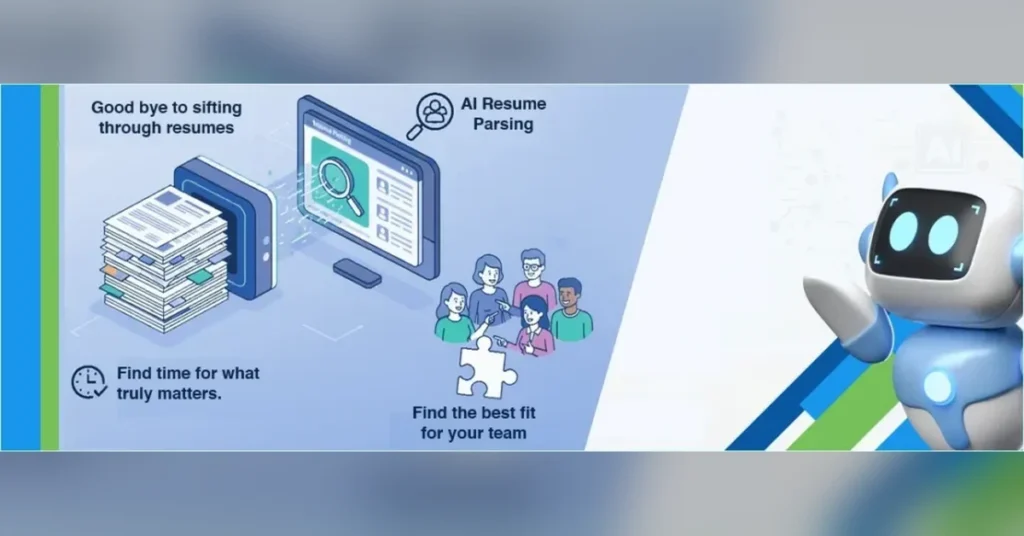
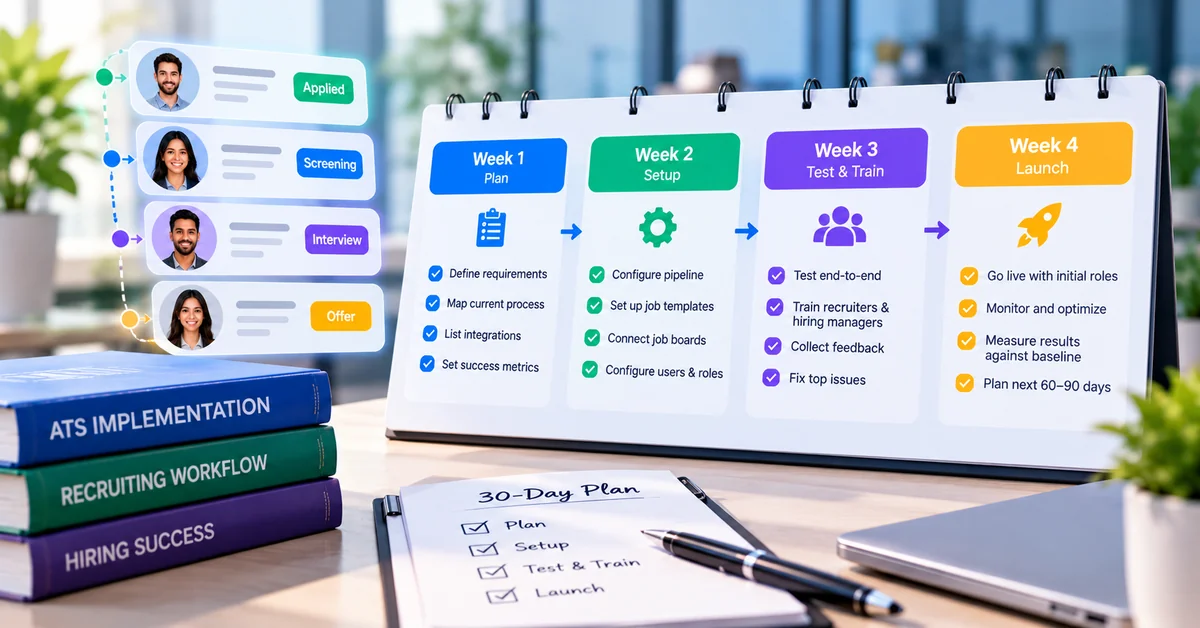
Calling all HR professionals! Meet your trusty ally in the recruitment domain: the Applicant Tracking System (ATS) software from SmoothHiring. Imagine effortlessly scanning through stacks of resumes without breaking a sweat. With the ATS’s resume parsing, you can do just that. This applicant tracking system helps you say goodbye to manual data entry and find time for what truly matters: finding the perfect fit for your team. An ATS recruiting system, often called a candidate tracking system, keeps every applicant, resume, interview and hiring decision in one place, so anyone on your team can see where a candidate stands.
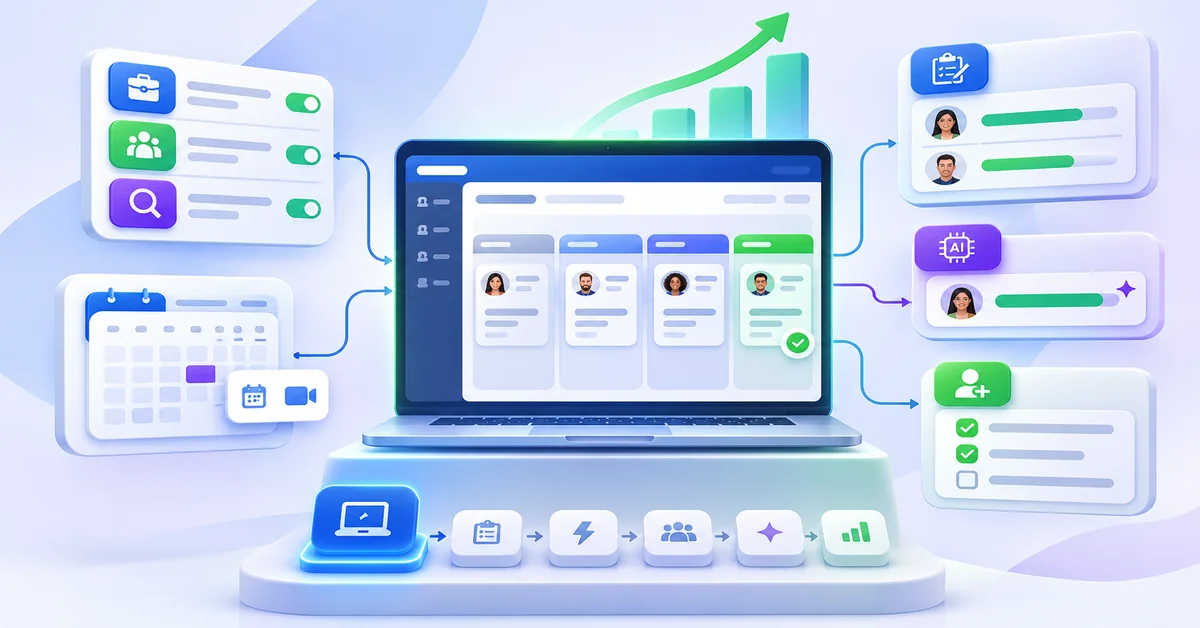
Short answer: An applicant tracking system (ATS) is recruiting software that collects job applications in one database and moves each candidate through hiring stages, from application to offer. Its core elements are candidate profiles, job posting and distribution, resume screening, interview scheduling, candidate communication, collaboration tools, a careers page, reporting and data security.
Evolution of ATS in recruitment
Hiring used to run on paper files, then on email folders and spreadsheets. As application volumes grew, employers adopted candidate tracking systems: simple databases that stored each applicant’s details and current status, so nobody had to dig through an inbox to find them.
ATS recruiting system, candidate tracking system or applicant tracking system?
Those tools grew into the ATS recruiting systems most teams use today. A modern ATS still tracks candidates, but it also posts jobs to multiple boards, parses resumes, books interviews, sends status emails and reports on where hires come from. Many now add AI features that summarize resumes or rank applicants against the job. For a full definition, see what an applicant tracking system is, and for the step-by-step flow, read about the ATS lifecycle from job posting to offer letter.
where i need to add this
Core Features of an ATS Recruiting System
Here are the core features of SmoothHiring’s Applicant Tracking System the teams rely on to streamline hiring.
Applicant profile management (candidate tracking)
Centralize candidate records, storing resumes, cover letters, and other documents with our Applicant profile management in the applicant tracking system. In addition, you can streamline tasks with the help of tagging, note-taking, and automated updates. This feature enables anyone to track a candidate’s status throughout the hiring process. This is the candidate tracking side of an ATS: one profile per person, with every stage change, note and message in view, so a strong applicant from last year can be found again with resume search.
Job posting and distribution
This feature allows recruiters to create and post job listings across 200+ job boards and various social media platforms, ensuring a broad reach every time within the ATS software. Applications from every board flow into the same pipeline, and source reporting shows which boards produce the candidates you hire. Learn more about job distribution software.
Resume parsing and AI screening
Resume parsing pulls names, skills and experience into a structured profile, so nobody retypes a resume. Knockout questions filter out applicants who miss must-have requirements, and on the Growth plan and above, AI filtering and candidate ranking help recruiters review the strongest matches first. See how smart candidate matching works.
Interview scheduling and feedback
Ever tried to match interview times with a potential candidate across time zones? You will know how frustrating it is. Interview scheduling and feedback tools in the ATS software simplify coordinating interview times between candidates and interviewers. Candidates can pick from interviewers’ open times with self-scheduling, automated reminders cut no-shows, and interview scorecards keep feedback structured so decisions are easier to compare.
Candidate communication and workflow automation
Email templates keep messages consistent, and on the Growth plan and above, automated stage triggers can send an update or move a candidate forward when a step is complete. Applicants stay informed without your team writing every email by hand. Explore recruiting automation software.
Collaboration and user permissions
Recruiters, hiring managers and interviewers work from the same candidate records, leave notes and share ratings. User management controls who can view and change what, which matters once several departments or locations hire through one system.
Branded careers page
A careers page in your company’s branding lists every open role and sends applications straight into the ATS, so candidates who find you directly are tracked the same way as those who come from job boards.
Reporting and analytics
End of the day, everyone would love to see reports. Gone are the days when you had to fill in data manually and generate a report. Advanced analytics help identify bottlenecks and optimise recruitment strategies, while customizable dashboards provide real-time data for informed decision-making. With SmoothHiring, create reports on KPIs like time-to-hire, source of hire, and candidate demographics within the applicant tracking system.
How to Manage Data Security with an Applicant Tracking System
Adhering to data protection guidelines is of utmost importance, and we at SmoothHiring follow all the regulations.
What does this mean for you?
- Robust security measures such as encryption, regular security audits
- Strict Access Controls.
- Anonymizing sensitive data
- Maintaining clear data retention policies.
Educate your team on security best practices to prevent breaches and build trust with candidates.
ATS Best Practices
Here are some guidelines by industry experts to make ATS a powerful tool that helps you attract and retain the best candidates. Use your ATS software effectively by keeping teams aligned and processes consistent.
Regularly update job descriptions and requirements to attract the right candidates · Identify top talent with automated screening tools · Engage all stakeholders to implement collaborative hiring features · Monitor and analyze key metrics to be on top of your game!
- Regularly update job descriptions and requirements to attract the right candidates.
- Identify top talent with automated screening tools.
- Engage all stakeholders to implement collaborative hiring features
- Monitor and analyze key metrics to be on top of your game!
Frequently Asked Questions
What problems does SmoothHiring’s ATS solve in the hiring process?
What problems does SmoothHiring’s ATS solve in the hiring process?
It removes manual, time-consuming tasks and centralizes hiring workflows. SmoothHiring’s ATS automates resume parsing to cut data entry, stores all candidate records and notes in one place, streamlines multi-channel job postings and interview coordination, and provides analytics and dashboards for informed, collaborative, and compliant hiring.
How does job posting and distribution broaden our candidate reach?
Recruiters can create a job once and distribute it across 200+ job boards and social media platforms directly from the ATS, ensuring broad, consistent exposure. This multi-channel reach increases visibility and, paired with reporting, helps you understand which sources deliver the best candidates.
How do interview scheduling and feedback tools help, especially across time zones?
The ATS simplifies coordinating times between candidates and interviewers, reducing back-and-forth and time zone confusion. Feedback is captured in the same system, so teams can review input quickly and keep candidates moving smoothly through the pipeline.
What can we track with reporting and analytics, and how does it improve decisions?
SmoothHiring offers customizable dashboards and real-time analytics to spot bottlenecks and optimize processes. You can create reports on key KPIs like time-to-hire, source of hire, and candidate demographics, enabling data-driven decisions that improve speed and quality of hiring.
How does SmoothHiring handle data security, and what should our team do?
SmoothHiring adheres to data protection best practices, including encryption, regular security audits, strict access controls, anonymizing sensitive data, and clear data retention policies. Your team should also be trained on security best practices to prevent breaches and build candidate trust.