
What “Type” of ATS Actually Means
Most comparisons flatten “type of ATS” into a single spectrum, but there are really two independent questions worth asking separately.
- Deployment: does the software run on the vendor’s servers (cloud) or yours (on-premise)?
- Scope: is it a focused tool that only tracks applicants, or a broader platform that also handles sourcing, candidate relationships, or HR data?
A platform can be cloud-based and narrowly focused, or cloud-based and broad. Company size adds a third, informal layer, since vendors tend to price and feature-gate around hiring volume rather than deployment model. The sections below work through all three.
Cloud-Based ATS (SaaS)
A cloud-based ATS, also called SaaS or software-as-a-service, runs on the vendor’s servers. Recruiters and hiring managers log in through a browser, and the provider handles hosting, updates, security patches, and uptime. There is no server to install and no IT team required to maintain one.
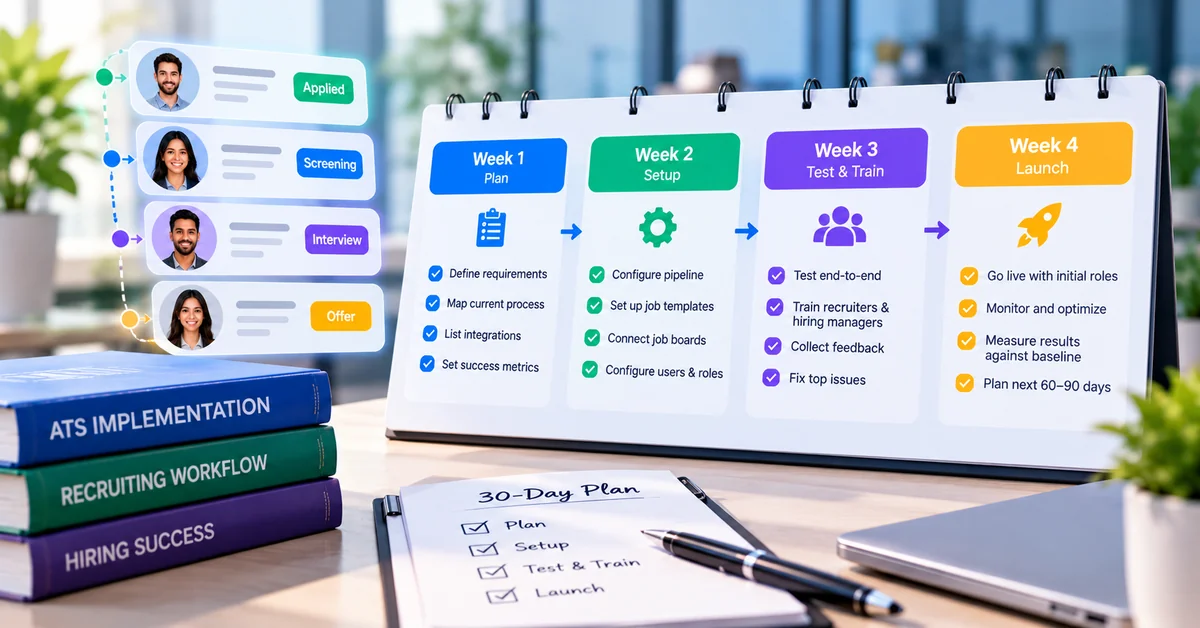
Cloud deployment now accounts for 53.8% of the ATS market, and small and medium-sized businesses are the fastest-growing segment adopting it, according to market research firm IMARC Group. The appeal for smaller teams is straightforward: no upfront hardware cost, a short setup window, often two to four weeks, and access from anywhere, which matters for remote or hybrid hiring teams.
The tradeoff is less control. Your data lives on the vendor’s infrastructure, and you’re subject to their release schedule and pricing changes. For the large majority of businesses under a few thousand employees, that tradeoff is worth it. Nearly every ATS built for small and mid-sized businesses today, SmoothHiring included, is cloud-based by default.
On-Premise ATS
An on-premise ATS is installed and run on a company’s own servers, with the organization’s IT department responsible for hosting, security, and updates. This was the standard model before cloud computing matured, and it still shows up in large enterprises, government agencies, and organizations with data residency or compliance requirements that make third-party hosting difficult to justify.
The case for on-premise is narrower than it used to be: full control over where candidate data physically lives, no dependency on a vendor’s uptime, and deep customization potential for organizations with the in-house engineering capacity to use it. The cost of that control is real. Upfront hardware and licensing costs run high, ongoing maintenance requires dedicated staff, and remote access typically needs a VPN or similar workaround.
For a small or mid-sized business, on-premise rarely makes sense today. The IT overhead alone usually costs more than a cloud subscription, and few SMBs have the compliance requirements that justify it.
AI-Powered ATS
“AI-powered ATS” describes a feature set, not a deployment model, and it can be layered onto either a cloud or on-premise system. In practice, it usually means some combination of resume parsing and skills extraction, candidate ranking or scoring based on job fit, automated screening questions, and generative tools for writing job descriptions or interview questions.
The label gets applied loosely across the market. Some platforms use “AI-powered” to describe basic keyword matching that has existed for two decades. Others use genuine machine learning to compare a candidate’s profile against the traits of a company’s existing top performers. The difference matters more than the label.
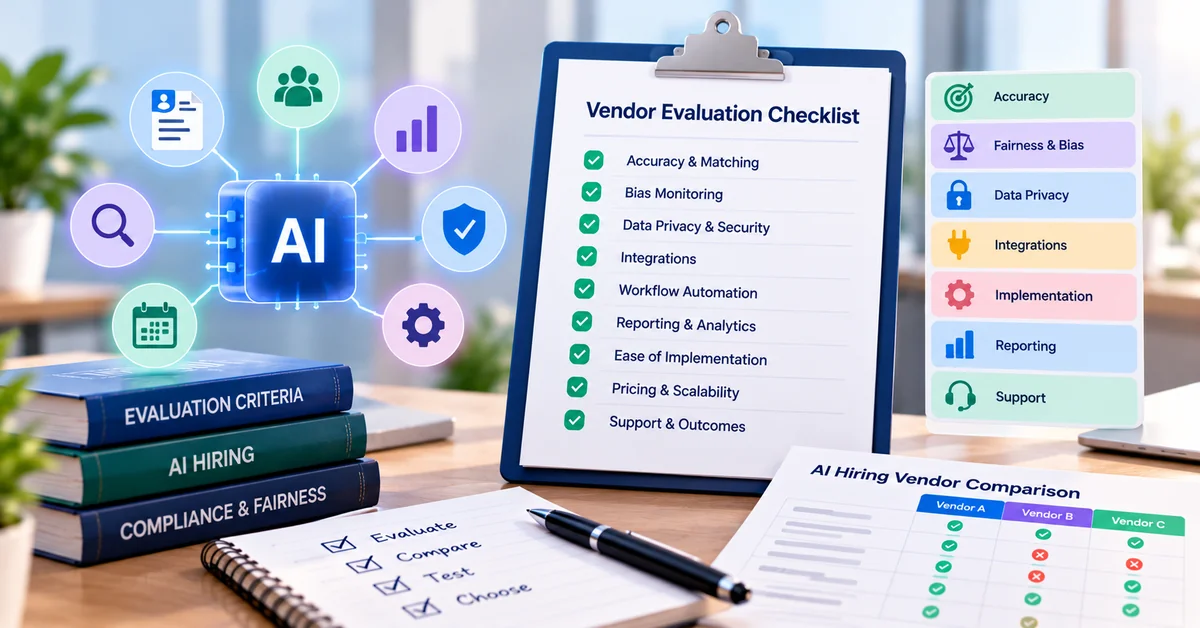
Before trusting an AI claim, ask a vendor how the system actually reaches its recommendation, and whether that logic can be explained in plain language. If they can’t answer clearly, treat the claim as marketing rather than a real capability.
ATS by Company Size
Deployment model and AI features aside, vendors also cluster by the size of business they’re built for, and pricing tracks closely with that segmentation. Entry-level platforms built for small teams typically run $30 to $250 a month. Mid-market tools sit in the $250 to $1,000-plus range. Enterprise platforms are usually quoted per user annually, often starting around $6,000 and climbing well into five figures once implementation is included, according to recruiting intelligence firm Gem.
| Segment | Typical Monthly Cost | Example Vendors |
|---|---|---|
| Small business (1 to 50 employees) | $0 to $250 | SmoothHiring, BreezyHR, JazzHR |
| Mid-market (50 to 500 employees) | $250 to $1,000+ | Workable, Lever |
| Enterprise (500+ employees) | $6,000+ per user/year | Greenhouse, iCIMS |
These bands aren’t strict. A well-funded 40-person startup might reasonably buy a mid-market tool, and a lean enterprise team might stay on something simpler longer than expected. Use them as a starting filter, not a rule.
Standalone ATS vs. All-in-One Recruiting Platforms
The second axis worth understanding is scope. According to recruiting software company Bullhorn, the category splits into standalone ATS platforms built to do one job well, ATS functionality bundled inside a broader HRIS or HCM suite, and industry-specific tools built for a single vertical like staffing or healthcare.
A related, newer split is worth adding to that list: platforms that bundle applicant tracking with full candidate relationship management, or CRM, in one product. Lever built its entire positioning around that convergence, marketing itself as an ATS and CRM combined rather than requiring a second tool for sourcing and pipeline nurturing, and it holds roughly 8% of enterprise ATS market share on the strength of that approach, according to HR-tech analyst Ongig. Greenhouse ships a CRM module alongside its core ATS for a similar reason.
The advantage of an all-in-one platform is fewer tools to manage and no data gap between candidates you’re tracking and candidates you’re building relationships with. The tradeoff is the usual one for bundled software: you’re paying for capability you may not need yet, and a dedicated point solution sometimes goes deeper on a specific job than a bundled feature can.
For a business making 5 to 20 hires a year, a standalone or lightly-bundled ATS is almost always the better starting point. Candidate relationship management earns its cost once you’re sourcing proactively for roles that don’t exist yet, which is a later-stage problem for most small businesses.
Which Type of ATS Is Right for Your Business?
Three questions narrow this down quickly:
- How many people are on your IT team? Zero, or close to it, means cloud rather than on-premise, almost automatically.
- How many roles do you fill a year? Under 20 or so, a standalone ATS covers what you need. Above that, particularly with proactive sourcing, an all-in-one platform starts paying for itself.
- Does your industry require strict data residency? If not, and most SMBs don’t, on-premise is solving a problem you don’t have.
For most small and mid-sized businesses, that points to a cloud-based, AI-assisted, standalone-or-lightly-bundled ATS, which is exactly where platforms like SmoothHiring sit. For the full evaluation framework, including integrations, red flags, and the exact questions to ask a vendor before signing, see our complete guide on how to choose an applicant tracking system.
Frequently Asked Questions
What type of ATS do most companies use today?
What type of ATS do most companies use today?
Cloud-based. It holds roughly 54% of the ATS market and is growing fastest among small and medium-sized businesses, according to IMARC Group. On-premise systems mostly remain in large, highly regulated organizations.
Is on-premise ATS software still worth considering?
Rarely, for small and mid-sized businesses. It only makes sense with strict data residency requirements and an in-house IT team to maintain it. The upfront and ongoing costs typically outweigh the control it provides.
What actually makes an ATS “AI-powered”?
It varies by vendor. At minimum it usually means resume parsing and keyword-based screening. More advanced systems add candidate scoring based on job fit or company-specific success patterns. Ask any vendor to explain how their AI reaches a recommendation before taking the label at face value.
Should a small business buy a standalone ATS or an all-in-one platform?
A standalone or lightly-bundled ATS is usually enough for businesses making under 20 hires a year. All-in-one platforms with built-in CRM tools become worth the extra cost once you’re sourcing candidates proactively for roles that don’t exist yet.
Does the type of ATS affect pricing?
Yes, significantly. Small-business tools typically run $0 to $250 a month, mid-market platforms $250 to $1,000-plus, and enterprise systems $6,000 or more per user annually, according to data from Gem.
Conclusion
The type of ATS that fits your business comes down to three decisions, not one: where it runs, how much it does beyond tracking applicants, and how AI capability is actually implemented under the hood. For most small and growing businesses, that means a cloud-based, AI-assisted platform that’s either standalone or lightly bundled, not an enterprise suite and not an on-premise system built for a different era of IT.
Once you know which type you’re looking for, the harder work is comparing vendors within that category. Our step-by-step buying guide covers exactly how to do that.