

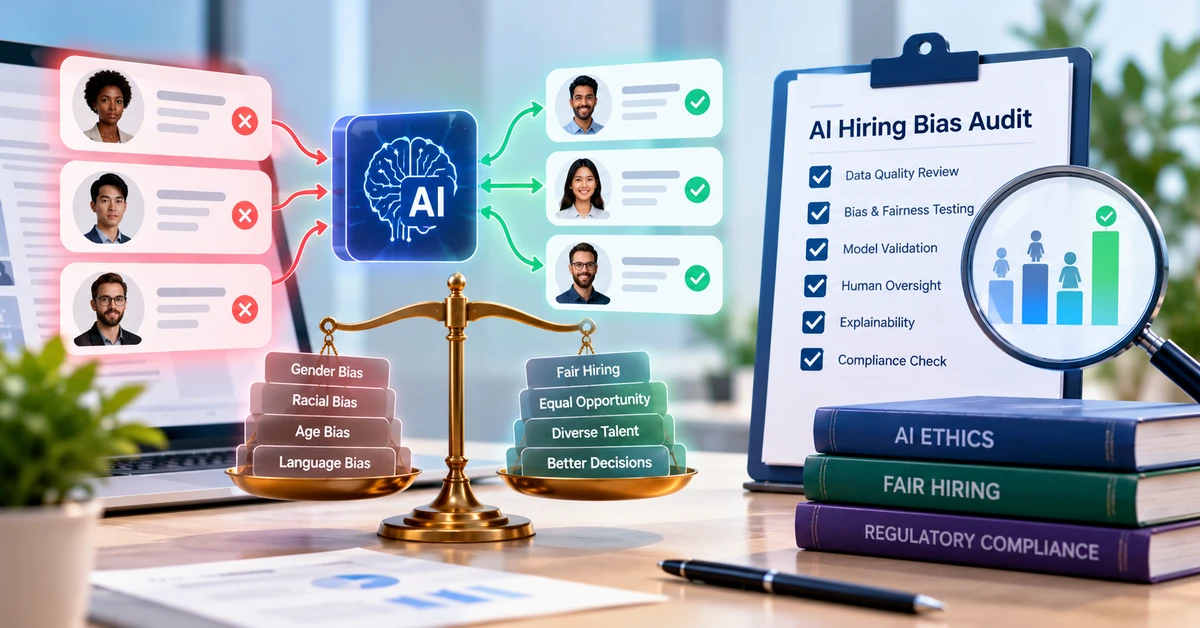
A single warehouse job posting can pull in 300 resumes over a weekend. A recruiter reading each one at two minutes apiece would need ten hours before ever picking up the phone. That’s the exact problem recruitment automation was built to solve, and it’s also where a lot of hiring teams get the idea wrong. Automating hiring doesn’t mean removing people from it. It means deciding, task by task, where software genuinely does the job better and where a person still has to be the one making the call.
This guide walks through that split: which parts of recruiting are safe, and smart, to hand off to software; which ones still need human judgment; and how to build a process where recruitment automation supports your team instead of quietly replacing the parts of hiring that actually work.
What Recruitment Automation Actually Means
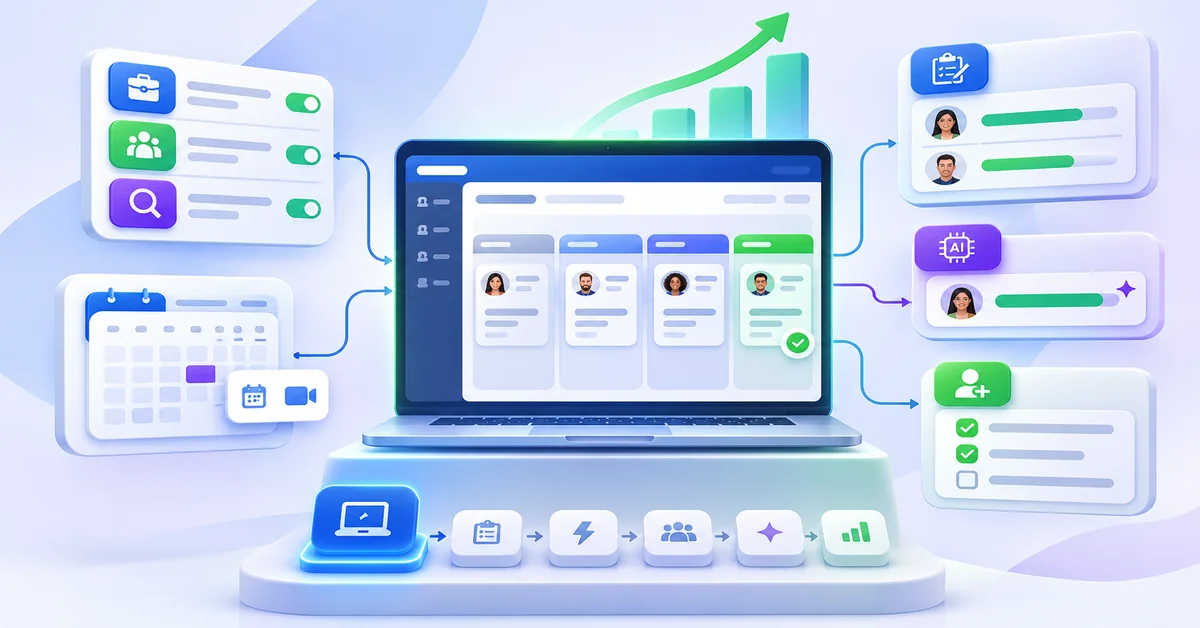
Recruitment automation is any software that takes a repeatable hiring task, one you’d otherwise do manually the same way every time, and runs it without a person clicking through each step. That covers posting a job to multiple boards at once, parsing resumes into a searchable format, sending scheduling links, and triggering status update emails.
It often gets confused with “AI hiring,” which is a narrower idea. Plain automation follows fixed rules you set (when a candidate applies, send a confirmation email). AI-based tools add judgment on top of that (rank these 200 applicants by fit for the role, or flag a candidate whose assessment scores match your best past hires). Most modern platforms, including an AI hiring platform, blend both: rules-based automation for repetitive admin work, and predictive scoring for the tasks that benefit from spotting patterns across past hires.
That distinction matters because it changes where a human needs to step back in. Simple automation rarely needs oversight. Anything that scores, ranks, or filters people does.
Which Recruiting Tasks Are Safe to Automate
Some tasks are genuinely low-risk to hand over to software. They’re repetitive, they don’t call for reading nuance, and getting them wrong costs a little time rather than a candidate’s trust.
Job Posting and Distribution
Manually posting one role to a dozen job boards is one of the least valuable ways a recruiter can spend an afternoon. Job distribution software pushes a listing out to multiple boards and your own career page at once, keeping the posting consistent everywhere it appears. There’s no judgment call involved here, just repetition, which makes it close to a pure win.
Resume Screening Against Hard Requirements
An Applicant tracking system can filter out applicants who don’t meet non-negotiable requirements, like a certification, a location, or a minimum number of years in a role, before anyone opens a resume. This is where teams need to stay careful, though. Filtering on hard requirements is safe. Filtering on softer signals, like penalizing employment gaps or non-traditional resume formats, can quietly screen out good candidates and deserves regular human review rather than being left fully on autopilot.
Interview Scheduling
Coordinating calendars between a candidate and three interviewers by email is one of the more miserable parts of a recruiter’s week. Interview scheduling software that lets candidates pick from open slots removes most of that back-and-forth, and it’s one of the clearest wins in the entire hiring process. Finding a shared 30-minute window doesn’t require anyone’s judgment.
Assessment and Test Delivery
Sending out a pre-employment assessment, tracking who’s completed it, and nudging candidates who haven’t, is administrative work that adds nothing when a person does it instead of software. The results themselves are a different story, covered below, but the delivery and tracking logistics are safe to automate in full.
Early-Stage Status Updates
“Thanks for applying.” “You’ve moved to the next round.” “We’ve decided to go a different direction.” These routine updates can go out automatically, and most candidates would rather get them quickly than wait days for a personal note that may never come. The one exception is a rejection at the finalist stage, which deserves a real conversation. More on that shortly.
Onboarding Paperwork
Once an offer is signed, employee onboarding involves a stack of forms, policy acknowledgments, and account setup tasks that don’t improve with a human touch. Automating this frees up whoever manages onboarding to focus on what actually matters: a new hire’s first week on the team.
Here’s how that breaks down at a glance:
| Recruiting Task | Automate It? | Why |
|---|---|---|
| Job posting and distribution | Yes | Pure repetition, no judgment needed |
| Screening against hard requirements | Yes | Rules-based, low risk |
| Screening/ranking on soft signals | Partial | Needs periodic human review to catch bias |
| Interview scheduling | Yes | Logistics only |
| Assessment delivery and tracking | Yes | Administrative |
| Interpreting assessment results | No | Requires context and judgment |
| Early-stage status update emails | Yes | Candidates prefer speed |
| Finalist-stage rejections | No | Deserves a real conversation |
| Offer negotiation | No | Built on trust and reading people |
| Onboarding paperwork | Yes | Administrative |
| Reference check scheduling | Yes | Logistics |
| Evaluating reference check answers | No | Requires judgment |
What Should Stay Human
Now the other half of the list.
Reading Context in an Interview
No tool picks up on why a candidate hesitated before answering a question about their last manager, or notices that someone lit up talking about one specific project. That’s still a person’s job, and it’s arguably the part of hiring that automation should be protecting time for, not encroaching on.
Rejections at the Finalist Stage
A candidate who made it through three rounds of interviews and didn’t get the offer deserves more than a template email. A short call, or at least a genuinely personal note, costs a recruiter a few minutes and tends to keep the door open for that person to apply again later, or to refer someone else your way.
Negotiating Offers
Salary, start date, remote flexibility: these conversations involve reading what someone actually needs versus what they’re asking for, and the right answer can shift based on things no form will capture, like a competing offer or a family circumstance. This stays a person’s conversation.
Borderline Candidate Decisions
When two candidates are close and the data doesn’t clearly favor one, that’s a judgment call, not a scoring problem. A hiring manager’s read on team fit, and a recruiter’s read on someone’s actual motivation for the role, should carry more weight here than a resume score.
Interpreting Predictive and Assessment Data
Tools like predictive hiring models and pre-employment assessments are good at surfacing patterns, such as a candidate profile that historically performs well in similar roles, but that pattern shouldn’t be the final word. A hiring manager still needs to weigh it against the interview, the specific demands of the role, and things a test can’t measure, like how someone will actually work with a particular team. [Insert link: SmoothHiring blog – predictive hiring guide] has more detail on how that scoring works under the hood.
Passive Candidate Outreach
Reaching out to someone who isn’t actively job hunting works because it feels personal. A generic automated message to a passive candidate on LinkedIn almost always reads as spam and gets ignored. This is relationship-building, and it stays manual for a reason.
A Simple Framework: Volume, Risk, and Judgment
Instead of deciding automation task by task forever, it helps to run every recruiting step through three questions:
Volume. Does this happen often enough that manual work adds up to real hours? High volume favors automation.
Risk. If this goes wrong, does it cost time, or does it cost trust, a good candidate, or a legal problem? Low risk favors automation.
Judgment. Does doing this well require reading a person, not just data? High judgment favors keeping it human.
A task that’s high volume, low risk, and low judgment (scheduling, posting, basic screening) is an easy automate. A task that’s low volume, high risk, and high judgment (a senior leadership hire, an accommodation request) should stay almost entirely human. Most of recruiting sits somewhere in the middle, which is why partial automation, like using an ATS to build a shortlist but having a person make the final call, is usually the right answer rather than an all-or-nothing choice.
Example: A regional healthcare group hiring 40 medical assistants a quarter is a strong candidate for automating job posting, screening against required certifications, and interview scheduling. That same organization hiring its next Chief Nursing Officer should automate almost none of that process. Same industry, sometimes the same company, completely different answer.
Common Mistakes Companies Make with Recruitment Automation
Automating candidate communication until it feels robotic. Templates work fine for early-stage updates. Sending an automated “we’re excited to move forward” message to someone who then waits three weeks for a human follow-up damages trust quickly.
Letting a score make the final call. Ranking and scoring tools are inputs to a decision, not replacements for one. Treating a resume score as a hiring decision, rather than a shortlist, is one of the more common and avoidable mistakes teams make.
No path back to a human. Candidates should always be able to reach a real person if something goes wrong, like a scheduling conflict or a question about the role, instead of getting stuck in an automated loop.
Skipping bias checks on screening rules. Rules that seem neutral, like penalizing employment gaps, can disproportionately affect candidates who took time off for caregiving or health reasons. These rules need periodic human review, not a one-time setup.
Automating everything at once. Rolling out automation across the whole pipeline in one go makes it hard to tell what’s working and what’s quietly turning candidates away. A phased rollout, with a way to track candidate drop-off at each stage, works better.
How to Roll Out Automation Without Losing the Human Touch
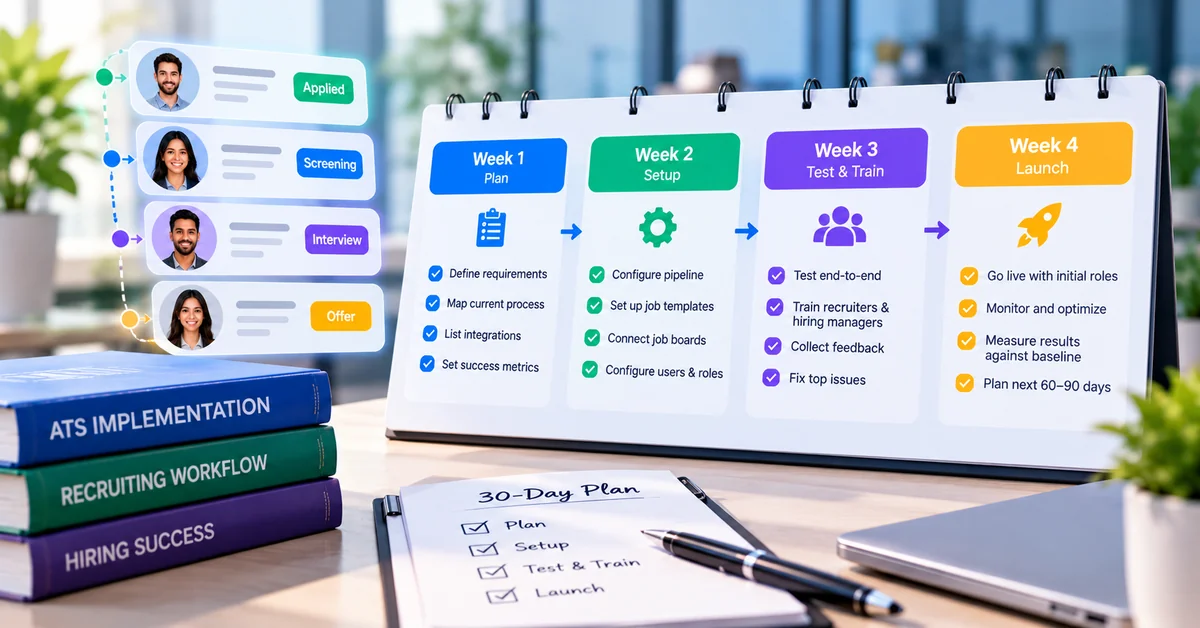
Start with zero-judgment tasks first, like scheduling, posting, and paperwork, before touching anything that ranks or filters people.
Keep a visible human checkpoint at every stage where automation makes a filtering decision, even if that checkpoint is just a quick weekly review of who got screened out and why.
Measure candidate experience, not only recruiter time saved. A process that’s faster for your team but frustrating for candidates will show up in your offer-acceptance rate before it shows up anywhere else.
Revisit automation rules every few months. A screening rule that made sense when you wrote it can become outdated as the role or the labor market changes.
Train your team on what the automation is actually doing. Recruiters who understand why a candidate was flagged or filtered can catch mistakes that a dashboard alone won’t surface.
How SmoothHiring Supports the Right Balance
A good hiring platform doesn’t aim to remove people from recruiting. It gives them their time back for the parts of the job that actually need them. SmoothHiring’s Applicant tracking system automates the repetitive parts of the process, posting, screening against requirements, and scheduling through built-in Interview scheduling software, while keeping the ranking and predictive tools transparent enough that a recruiter can see why a candidate was flagged, not just that they were. Paired with pre-employment assessments and video assessment software for early-stage screening, teams can cut their admin load substantially and still make every decision that matters with a person looking at the full picture.
Frequently Asked Questions
What recruiting tasks should I automate first?
What recruiting tasks should I automate first?
Start with tasks that involve no judgment: job posting and distribution, interview scheduling, and routine status update emails. These save the most time with the least risk of a poor candidate experience or a biased outcome.
Does automating recruitment hurt the candidate experience?
It can, if communication becomes so automated that candidates never reach a person. Used well, with fast confirmations, easy scheduling, and quick updates, recruitment automation usually improves candidate experience by cutting wait times.
Is AI reliable enough to make screening decisions on its own?
AI-based screening tools are reliable for surfacing patterns and building a shortlist, but they shouldn’t make final hiring decisions unsupervised. A person should regularly review how screening rules are filtering candidates, especially around softer criteria.
How much of the hiring process can realistically be automated?
The administrative half, posting, scheduling, tracking, paperwork, can be almost fully automated. The evaluative half, interviews, final decisions, negotiations, and borderline calls, should stay mostly or entirely human.
Can small businesses benefit from recruitment automation tools, or is this only useful for large companies?
Small and mid-sized companies often see the biggest relative benefit, since they usually don’t have a dedicated recruiting team, and automation frees up whoever is handling hiring alongside other responsibilities.
What’s the difference between recruitment automation and AI-based hiring decisions?
Automation follows fixed rules for repetitive tasks, like sending an email the moment a candidate applies. AI hiring tools add judgment on top, such as ranking candidates based on patterns from past hires. Automation needs little oversight; AI-based ranking needs regular human review.
How do I know if my company is over-automating hiring?
Common warning signs include candidates unable to reach a real person, a rise in candidates dropping out mid-process, and hiring managers relying on automated scores without reviewing the reasoning behind them.
Conclusion
Recruitment automation works best as a way to protect your team’s time, not replace their judgment. The tasks worth automating are the ones nobody enjoyed doing by hand anyway: posting jobs everywhere at once, coordinating calendars, tracking assessments, sending routine updates. The tasks worth keeping human are the ones where a person’s read on context, motivation, and fit genuinely changes the outcome: interviews, borderline decisions, negotiations, and any conversation that shapes how a candidate feels about your company.
Getting that split right has less to do with finding the most advanced software and more to do with being honest about where automation actually helps. If you’re evaluating where to start, take a look at how SmoothHiring’s applicant tracking system and AI hiring platform handle that handoff, and consider to see which parts of your current process are ready to hand off to software today.


