


A cognitive ability test measures how someone reasons through a problem, not what they already happen to know. That distinction trips up a lot of hiring teams, who either assume it’s a harder trivia quiz or, worse, an IQ test with different branding for HR purposes. It’s neither, and understanding what it actually measures is the difference between using it well and using it as an expensive way to screen out good candidates for the wrong reasons.
This guide covers what a cognitive ability test measures, why it has one of the strongest track records of any hiring assessment for predicting job performance, where it runs into legal and practical trouble, and how to build it into a hiring process without treating it as the only signal that matters.
What Is a Cognitive Ability Test?
A cognitive ability test measures general reasoning skill, sometimes called general mental ability, across areas like verbal comprehension, numerical reasoning, and abstract or logical problem-solving. It’s built to assess how quickly and accurately someone can learn new information, spot patterns, and work through unfamiliar problems, rather than testing knowledge they were expected to memorize ahead of time.
It’s worth separating this from two things it commonly gets confused with:
It’s not an IQ test. IQ tests are typically framed clinically and often cover a broader range of cognitive domains than a workplace assessment needs. Employment-focused cognitive tests are narrower, shorter, and built specifically around the kinds of reasoning that show up in day-to-day work.
It’s not a skills or knowledge test. A skills test checks whether someone can already do a specific task, like build a pivot table in Excel or write clean SQL. A cognitive test checks how well someone can reason through something new, which matters most for roles where the job itself keeps changing.
It’s also a different tool entirely from a personality assessment , which measures traits and work-style preferences rather than reasoning ability. The two are often used together precisely because they measure different things.
What a Cognitive Ability Test Actually Measures
Verbal Reasoning
Verbal Reasoning
The ability to understand written information, draw logical conclusions from it, and identify relationships between ideas. This shows up in almost every role that involves reading policies, instructions, or client communication and needing to act on them correctly.
Numerical Reasoning
The ability to interpret numerical data, spot trends, and draw sound conclusions from figures, tables, or charts. This matters well beyond finance roles: operations, sales, and even customer service roles increasingly involve interpreting data dashboards.
Abstract or Logical Reasoning
The ability to identify patterns and relationships that aren’t expressed in words or numbers, often tested through sequences or shape-based puzzles. This is generally considered the closest proxy for raw problem-solving ability, independent of language or numeracy skill, which also makes it useful for reducing certain language-based disadvantages in a diverse candidate pool.
Role-Specific Additions
Some cognitive assessments add mechanical reasoning (understanding how physical systems work) or spatial reasoning (visualizing how objects relate to each other in space), which are more relevant for technical, engineering, or skilled trade roles than for general office positions.
Why Cognitive Ability Predicts Job Performance
General cognitive ability is one of the most extensively studied predictors in the entire field of industrial-organizational psychology. Decades of meta-analytic research, most notably the work of researchers Frank Schmidt and John Hunter, has consistently found that measures of general mental ability predict job performance more strongly and more consistently across a wider range of occupations than most other single selection tools, including unstructured interviews, reference checks, or years of experience alone.
The reasoning behind this finding is fairly intuitive once you sit with it: most jobs require learning new information, adapting to changes in tools or processes, and solving problems that weren’t covered in training. Someone who reasons through new information quickly and accurately tends to pick up new systems faster, troubleshoot more effectively, and adapt more smoothly when a role’s demands shift, which happens in nearly every job eventually.
That said, the predictive strength isn’t identical across every role. Cognitive ability tends to matter most in roles involving complexity, ambiguity, and frequent problem-solving, think account management, technical support, or supervisory roles, and matters somewhat less in highly routinized roles where the day-to-day tasks rarely change.
Example: A logistics company hiring dispatchers, a role that involves constant real-time problem-solving as routes and conditions change, is likely to see a stronger link between cognitive test scores and on-the-job performance than the same company would see hiring for a role with a fixed, repetitive daily checklist.
The Trade-off: Predictive Power vs. Adverse Impact
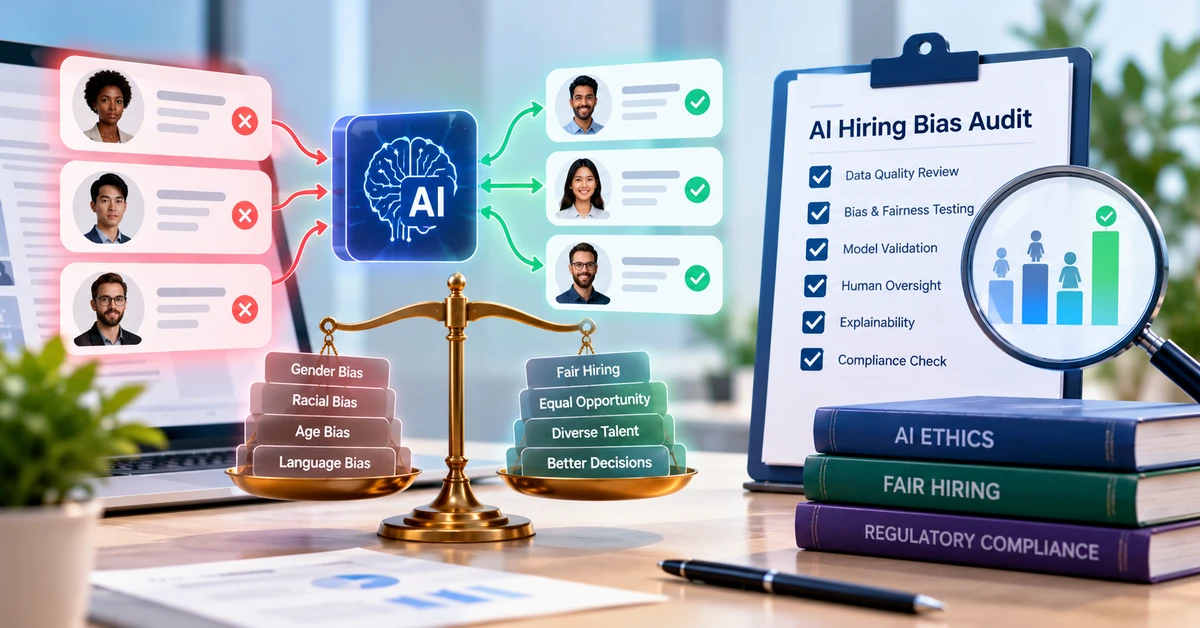
Cognitive ability testing carries a well-documented tension that any hiring team using it should understand going in. While it’s a consistently strong predictor of job performance, research has also documented average score differences between some demographic groups on certain cognitive measures, which can raise disparate impact concerns under U.S. equal employment law (specifically, the framework laid out in the Uniform Guidelines on Employee Selection Procedures).
This doesn’t mean cognitive testing is off-limits. It means the test needs to be genuinely job-related, validated against actual job requirements, and reviewed regularly for adverse impact, with less discriminatory alternatives considered where they exist and perform comparably. This is a compliance area where working with employment counsel or a qualified I-O psychologist before rolling out or scaling a cognitive assessment is a reasonable and common step, not an overcautious one.
Cognitive Tests vs. Personality Tests vs. Skills Tests
Assessment Measures Strongest For Watch Out For Cognitive ability test Reasoning and problem-solving Roles with complexity, ambiguity, or frequent change Requires validation to manage adverse impact risk Personality test Traits and work-style preferences Team fit conversations, onboarding Weaker link to performance when used alone Skills/technical test Job-specific competence Roles with a clear, testable hard skill Doesn’t predict adaptability to new tasks
How to Use Cognitive Ability Tests Fairly and Effectively
| Assessment | Measures | Strongest For | Watch Out For |
|---|---|---|---|
| Cognitive ability test | Reasoning and problem-solving | Roles with complexity, ambiguity, or frequent change | Requires validation to manage adverse impact risk |
| Personality test | Traits and work-style preferences | Team fit conversations, onboarding | Weaker link to performance when used alone |
| Skills/technical test | Job-specific competence | Roles with a clear, testable hard skill | Doesn’t predict adaptability to new tasks |
How to Use Cognitive Ability Tests Fairly and Effectively
Start with a real job analysis. Understand what reasoning demands the role actually has before choosing or building a test, rather than applying the same assessment to every open role by default.
Set validated cutoffs, not arbitrary ones. A pass/fail line should come from data on how scores relate to actual performance in the role, not a round number that felt reasonable.
Combine it with other signals. A structured interview, a work sample, or a pre-employment assessment focused on job-relevant skills should sit alongside the cognitive score, not get replaced by it.
Audit for adverse impact on a regular schedule, not just once at launch, and be ready to adjust the tool or the process if a gap shows up.
Be transparent with candidates about what the test measures and how it factors into the decision. This tends to reduce anxiety and doesn’t meaningfully change performance on a well-designed reasoning test.
Reserve it for roles where reasoning genuinely matters most. Not every role benefits equally from this kind of testing, and applying it everywhere by default adds friction to the process without adding predictive value.
Where Cognitive Testing Fits in Your Hiring Process
Most companies place a cognitive ability test early to mid-funnel: after an initial resume screen through an applicant tracking system narrows the pool, but before the more time-intensive interview stages. This keeps the investment of a longer interview reserved for candidates who’ve already shown they can reason through the kind of problems the role actually involves, and it pairs naturally with predictive hiring tools that weigh cognitive scores alongside other data points collected earlier in the process.
How SmoothHiring Supports Cognitive and Predictive Assessment
SmoothHiring’s pre-employment assessment suite includes reasoning-based testing that can be tailored to the demands of a specific role, all managed inside the same applicant tracking system you’re already using to track candidates. Combined with predictive hiring models that learn from your own historical hiring and performance data, teams get a cognitive score in context, not a bare number with no connection to how it actually maps to success in the role.
Frequently Asked Questions
What does a cognitive ability test actually measure?
What does a cognitive ability test actually measure?
It measures general reasoning skill, typically covering verbal comprehension, numerical reasoning, and abstract or logical problem-solving, rather than job-specific knowledge or personality traits.
Is a cognitive ability test the same as an IQ test?
Not exactly. Employment-focused cognitive tests are narrower and shorter than clinical IQ tests, and they’re built specifically around reasoning skills relevant to workplace tasks rather than a broad clinical assessment.
Why does cognitive ability predict job performance so well?
Most jobs require learning new information, adapting to changing tools or processes, and solving unfamiliar problems. Strong general reasoning skill tends to translate into faster learning and better problem-solving across a wide range of roles, which is why decades of research in industrial-organizational psychology consistently link it to job performance.
Are cognitive ability tests legally risky to use?
They can raise disparate impact concerns if not properly validated, since research has documented average score differences between some demographic groups on certain measures. Using a job-related, validated test and auditing regularly for adverse impact reduces that risk substantially.
Should every role use a cognitive ability test?
No. It adds the most value for roles involving complexity, ambiguity, or frequent problem-solving. Highly routinized roles with little day-to-day variation see less benefit from this type of testing.
Can candidates prepare for or practice cognitive ability tests?
To some degree, familiarity with the test format can modestly improve scores, which is one reason many employers offer practice questions upfront so the test measures reasoning ability rather than unfamiliarity with the format itself.
How is a cognitive test different from a skills test?
A skills test measures whether someone can already perform a specific task, like using a particular software tool. A cognitive test measures how well someone reasons through new or unfamiliar problems, which matters most for roles where the work itself keeps evolving.
Conclusion
A cognitive ability test earns its place in a hiring process because it measures something a resume and an interview often miss: how well someone will actually reason through the parts of the job that haven’t been written down yet. Used on its own, without validation or without pairing it with other signals, it can create legal risk and an incomplete read on a candidate. Used deliberately, validated against the actual demands of the role and combined with structured interviews and relevant skills testing, it’s one of the more reliable tools available for predicting who will succeed once they’re actually doing the job.
If you’re weighing whether to add cognitive testing to your process, look at how SmoothHiring’s pre-employment assessment and predictive hiring tools work together to put a cognitive score in real context, and request a demo to see what that looks like for your open roles.


