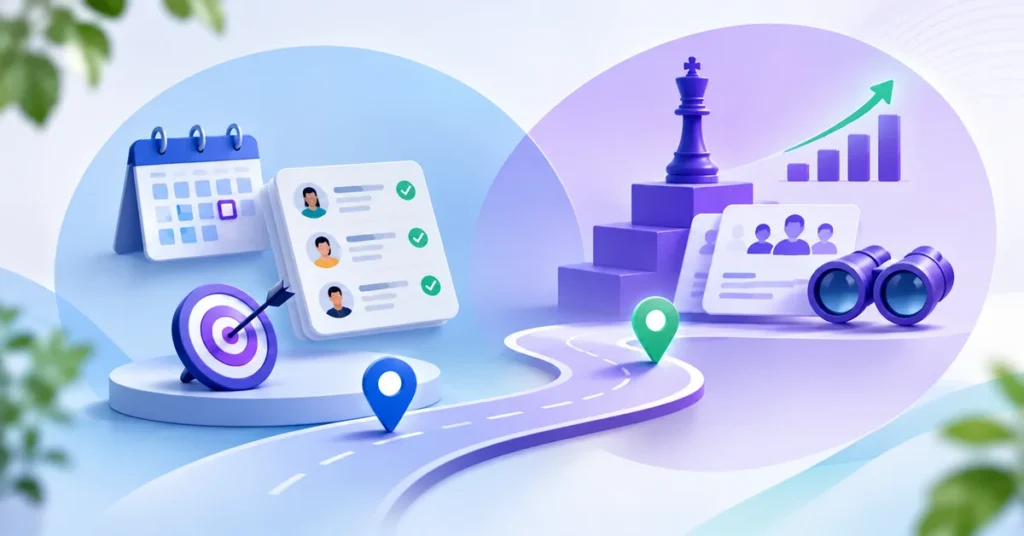
Recruitment is the process of filling open jobs: writing the job post, collecting applications, screening, interviewing and making an offer. Talent acquisition is the broader, longer-term strategy around it: planning which roles the business will need, building an employer brand, keeping a pipeline of candidates warm and measuring whether hires succeed. Put simply, recruitment fills today’s vacancies, and talent acquisition makes the next ones easier to fill.
Talent acquisition vs recruitment in one answer: Recruitment is a short-term, reactive process that fills open positions as they arise. Talent acquisition is a continuous, strategic approach that includes recruitment plus workforce planning, employer branding, talent pipelines and hiring analytics. Recruitment asks “who can start next month?” Talent acquisition asks “who will we need next year?”
The distinction matters for small businesses. US employers had about 7.5 million job openings and made 5.4 million hires in September 2026, according to the Bureau of Labor Statistics, so competition for the same candidates stays steady. SHRM’s 2026 recruiting benchmarking, based on data from more than 4,600 organizations, puts the median time to fill a non-executive role at 39 calendar days. A company that only starts looking when someone resigns accepts that gap every time.
Key takeaways
- Recruitment is one part of talent acquisition. Every talent acquisition strategy includes recruiting, but recruiting alone does not include planning, branding or pipeline building.
- Recruitment is triggered by a vacancy. Talent acquisition runs continuously, whether or not a role is open.
- Recruitment is measured by speed and cost per hire. Talent acquisition is also measured by quality of hire, retention and how ready the business is for future roles.
- Most small businesses start with recruitment and add talent acquisition practices as hiring volume grows or key skills get harder to find.
What is talent acquisition?
What is talent acquisition?
Talent acquisition is the ongoing work of finding, attracting, hiring and keeping the people a business needs to meet its goals, now and in the future. It treats hiring as a business function with a plan, rather than a task that starts when a desk empties.
A talent acquisition strategy usually covers five areas:
- Workforce planning: deciding which roles the business will need over the next 6 to 18 months, based on growth plans and expected turnover.
- Employer brand: how the company presents itself to candidates, from the careers page to how quickly it replies to applicants.
- Sourcing and talent pipelines: building relationships with candidates before a role opens, including past applicants, referrals and people who were strong runners-up.
- Selection: structured interviews, assessments and scorecards that predict performance in the role.
- Onboarding and measurement: getting new hires productive quickly and tracking whether they stay and perform, so the next round of hiring improves.
Example: a fintech company. A 60-person payments startup knows it will need two compliance analysts next year. Instead of waiting to post the jobs, its people team keeps a short list of qualified candidates from earlier searches, prepares a structured interview and the background-check steps regulated roles require, and starts conversations early, so the search is shorter once the roles open.
What is recruitment?
Recruitment is the process of filling a specific open position. It begins when a manager requests a hire and ends when a candidate accepts the offer. Every business does it, whether or not it uses the term talent acquisition.
A typical recruitment process follows these steps:
- Define the role and write the job description.
- Post the job on job boards, the careers page and social channels.
- Screen applications against the role’s must-have requirements.
- Interview shortlisted candidates and collect feedback.
- Check references, make an offer and hand the new hire to onboarding.
Common recruitment strategies include posting on several job boards at once, employee referrals, social media and reaching out to past applicants for the role.
Example: An IT services firm. A backend developer resigns with two weeks’ notice. The manager writes a job post, it goes out to several job boards, and the team screens resumes, runs two interview rounds and makes an offer. That is recruitment: one role, a clear goal and a defined end.
Talent acquisition vs recruitment: key differences
Scope
Scope
Recruitment covers the steps from job post to signed offer. Talent acquisition covers everything before and after those steps as well: planning, branding, pipeline building, onboarding and measuring results.
Timeline
Recruitment works in weeks and ends when the role is filled. Talent acquisition works in quarters and years and never really ends, because the pipeline and employer brand need constant upkeep.
Objective
The goal of recruitment is to fill a role with a qualified person, quickly and within budget. The goal of talent acquisition is to make sure the business always has access to the skills it needs, and that the people it hires perform and stay.
Measurement
Recruitment is judged on time to fill, cost per hire and number of qualified applicants. Talent acquisition adds quality of hire, first-year retention, offer acceptance rate and how many roles were filled from an existing pipeline.
Talent acquisition vs recruitment comparison table
Here is recruitment vs talent acquisition side by side.
| Recruitment | Talent acquisition | |
|---|---|---|
| Definition | The process of filling a specific open position | A continuous strategy for finding, hiring and keeping the people the business needs |
| Objective | Fill the vacancy quickly with a qualified candidate | Build long-term access to the right skills and improve hire quality |
| Timeline | Short term: starts with a vacancy, ends with an accepted offer | Long term: ongoing, planned months or years ahead |
| Trigger | A resignation, a new budget line or an urgent need | Business plans, growth targets and expected turnover |
| Typical strategies | Job posting, resume screening, interviews, referrals for the open role | Workforce planning, employer branding, talent pools, structured assessment, data-driven sourcing |
| Process | Post, screen, interview, offer | Plan, attract, engage, select, hire, onboard, measure and improve |
| Key metrics | Time to fill, cost per hire, applicants per role | Quality of hire, retention, offer acceptance, pipeline fill rate, plus recruitment metrics |
| Business outcome | An empty seat is filled | Fewer emergency hires, better-fit employees and a hiring process that improves over time |
| Typical tools | Job boards, an applicant tracking system, interview scheduling | All recruitment tools plus talent pools, assessments, predictive analytics and hiring reports |
Is talent acquisition different from recruiting?
Yes, but less than job titles suggest. “Recruiting” and “recruitment” mean the same thing, and many companies call their recruiters “talent acquisition specialists” without changing what they do. In the talent acquisition vs recruiting question, the real difference is the approach, not the title: a team doing talent acquisition plans ahead, keeps in touch with candidates between openings and measures what happens after the hire. A team doing recruitment responds to each opening as it comes.
Think of the two as a spectrum rather than a choice: a five-person company hiring once a year rightly relies on recruitment, while a company hiring every month for similar roles gains a lot from adding talent acquisition practices.
When should a business use talent acquisition?
Talent acquisition pays off when hiring becomes regular or a slow or wrong hire gets expensive. Watch for these signals:
- You hire for the same roles several times a year, such as engineers, sales reps or support staff.
- Key skills are scarce in your market, so open roles stay open for months.
- Leadership has a growth plan with headcount targets for the next year.
- Turnover in certain roles is high, and you keep restarting searches from zero.
- You are expanding to new locations or states and need a consistent hiring process across them.
Example: a growing SaaS company. A software company plans to add six engineers over the next 12 months. A talent acquisition approach means defining a success profile for each level, building a talent pool from past applicants and referrals, standardizing technical interviews, and tracking which sources produce engineers who stay. By the third hire, the process is faster and more predictable than the first.
For fintech and other regulated businesses, planning ahead matters even more. Roles that need licensing, background checks or specific compliance experience take longer to fill, so starting the pipeline early avoids leaving critical positions empty. Our practical framework for predictive talent acquisition in small businesses shows how to start with the data you already have.
When is recruitment the right approach?
Recruitment on its own is often enough, and not every hire needs a strategy. It works well when:
- The role is a one-off, such as a first office manager or a specialist you will not hire again soon.
- You need an urgent replacement and the role is easy to describe and fill.
- Hiring is seasonal or project-based, with a clear start and end.
- You hire only a handful of people a year, with one person making the decisions.
Example: a growing services business. A 25-person accounting firm replacing a retiring receptionist needs a clear job post, a few job boards and a structured interview, not a talent pipeline for a role it fills every few years.
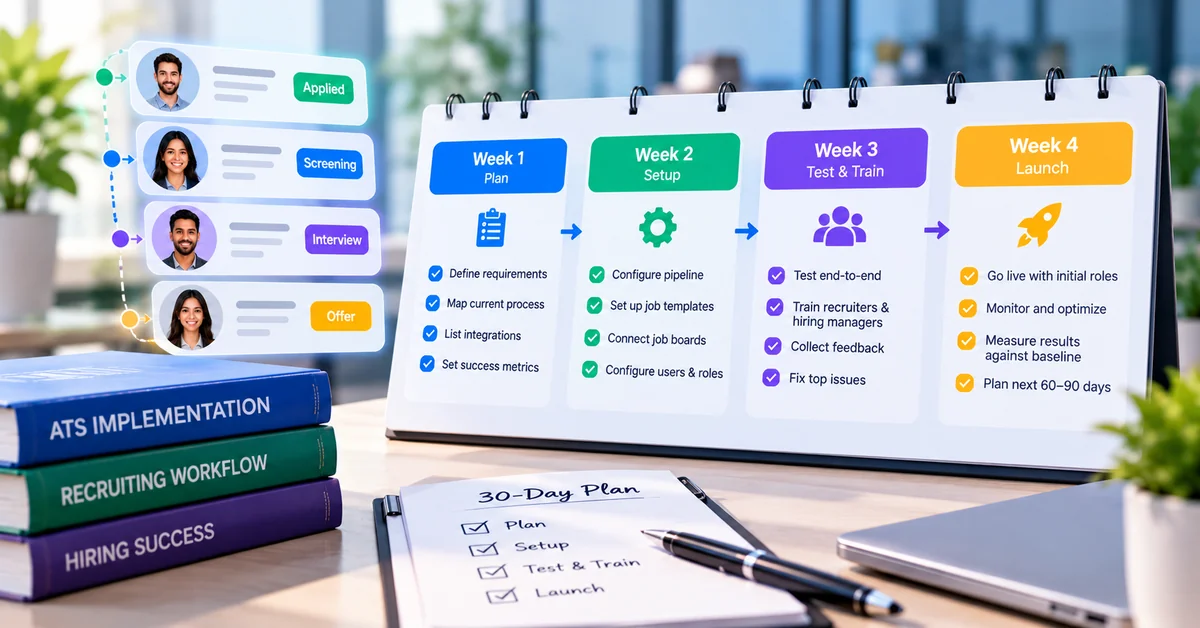
Most small businesses move from recruitment toward talent acquisition gradually. A practical order is to standardize the recruitment process first, then keep strong past applicants in a searchable pool, then add structured assessments and basic hiring metrics, and only then formalize workforce planning.
How hiring technology supports talent acquisition and recruitment
Recruitment needs tools that make each hire faster; talent acquisition needs tools that keep data and relationships between hires.
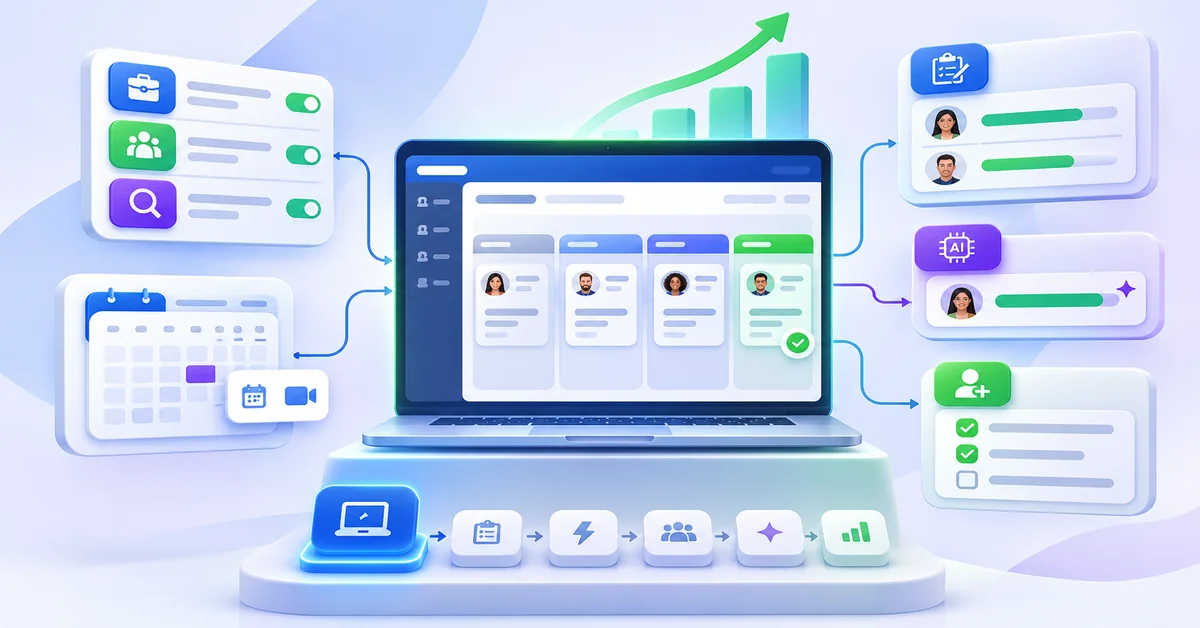
For recruitment: an applicant tracking system to collect and move candidates through stages, job distribution software to post one job to many boards, and interview scheduling software to cut the back-and-forth of booking interviews.
For talent acquisition: everything above, plus searchable talent pools, structured assessments, predictive hiring to estimate job fit before the interview, and reports on source of hire, time to fill and retention.
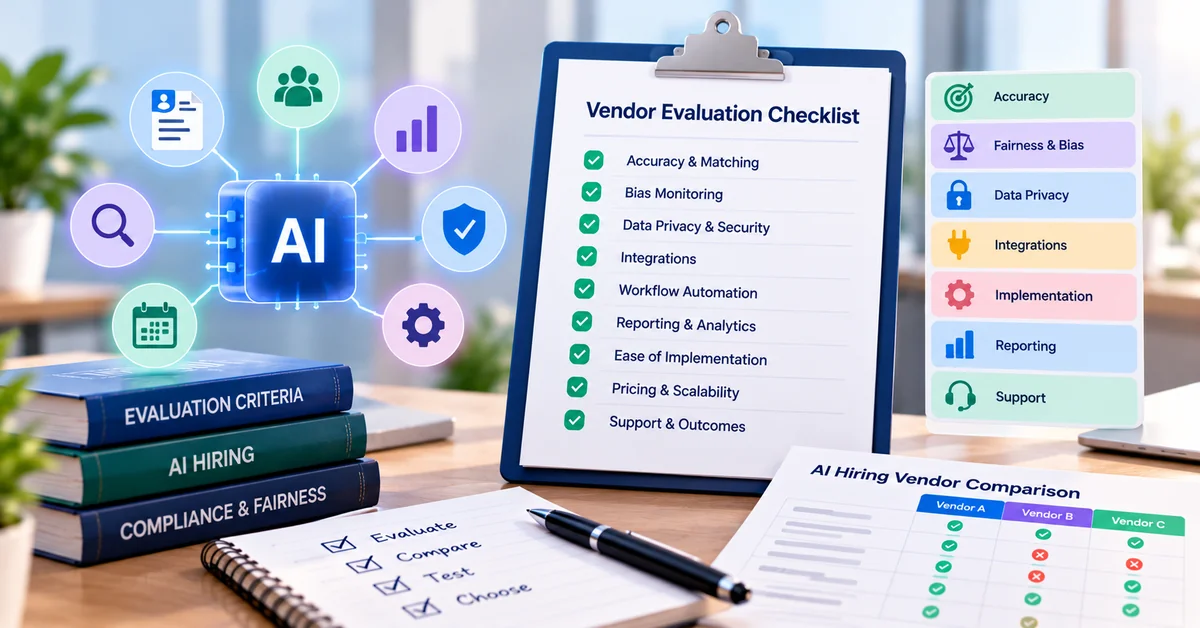
If you are comparing platforms, our guide to choosing talent acquisition software walks through the evaluation criteria, and our overview of recruiting software for small businesses covers the core features a growing team needs first. Whatever you choose, check how any AI features make their recommendations and keep a person responsible for final hiring decisions.
How SmoothHiring helps businesses simplify hiring
SmoothHiring is built for small and mid-sized businesses that want to run day-to-day recruitment efficiently and grow into talent acquisition without switching systems. It combines:
- An applicant tracking system with custom pipelines, a resume parser, knockout questions, interview scorecards and a branded careers page.
- Job distribution to more than 200 job boards and social platforms from one place.
- Interview scheduling with self-scheduling, calendar sync and automated reminders.
- An AI hiring platform that helps write job descriptions, generate interview questions and rank applicants against the role.
- Predictive hiring analytics based on a patented psychometric assessment, which compares candidates with the traits of your successful employees.
- Onboarding tools to hand new hires smoothly from offer to first day.
Teams can start with the recruitment basics and turn on talent pools, assessments and predictive insights as hiring volume grows. You can review the plans and features or book a demo to see how a role moves from job post to offer.
Frequently asked questions
Is talent acquisition the same as recruitment?
Is talent acquisition the same as recruitment?
No. Recruitment is the process of filling a specific open position. Talent acquisition is a broader, ongoing strategy that includes recruitment plus workforce planning, employer branding, talent pipelines, onboarding and measuring hire quality. All talent acquisition includes recruitment, but recruitment on its own is only one part of talent acquisition.
Which is better for a small business, talent acquisition or recruitment?
It depends on hiring volume. A business that hires a few people a year can rely on a clear recruitment process. Once you hire for the same roles regularly, struggle to find scarce skills or have growth targets, adding talent acquisition practices such as talent pools and structured assessments usually saves time and reduces bad hires.
What does a talent acquisition specialist do compared with a recruiter?
A recruiter typically focuses on filling open roles: sourcing, screening, interviewing and closing candidates. A talent acquisition specialist does that too, but also works on longer-term activities such as employer branding, building candidate pipelines, workforce planning with managers and tracking hiring metrics. In small companies, one person often does both.
What are the stages of the talent acquisition process?
A common model has seven stages: workforce planning, employer branding, sourcing and pipeline building, screening and assessment, interviewing and selection, offer and onboarding, and measurement and improvement. Recruitment covers the middle stages, from sourcing to offer.
What metrics show whether talent acquisition is working?
Start with recruitment metrics such as time to fill and cost per hire, then add quality-of-hire measures such as first-year retention and new-hire performance ratings, offer acceptance rate, source of hire and the share of roles filled from an existing talent pool.
Do small businesses need talent acquisition software?
Not always. Very small teams can start with an applicant tracking system and job distribution. As hiring grows, software that adds talent pools, assessments, scheduling and reporting lets a small team run talent acquisition without adding headcount.
Conclusion
Talent acquisition vs recruitment is not a choice between competing methods. Recruitment fills open roles; talent acquisition decides which roles to fill, where candidates will come from and whether hires succeed. Few small businesses need a full talent acquisition function on day one, but most benefit from a few of its habits early: keeping strong candidates in a pool, standardizing interviews and measuring each hire. Start there, and each new opening gets easier to fill.